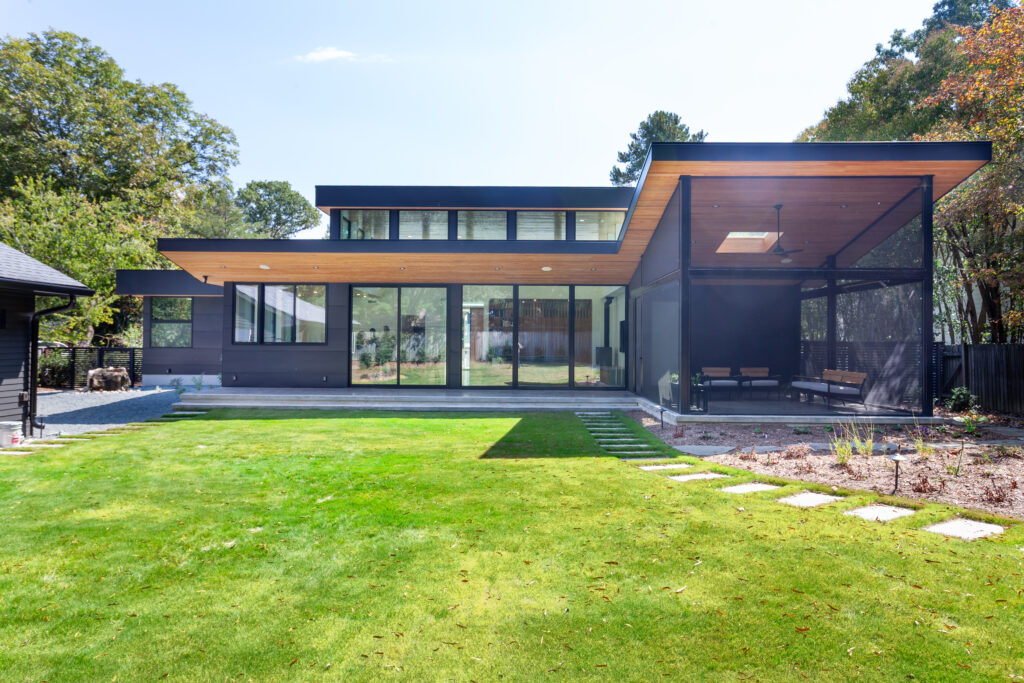
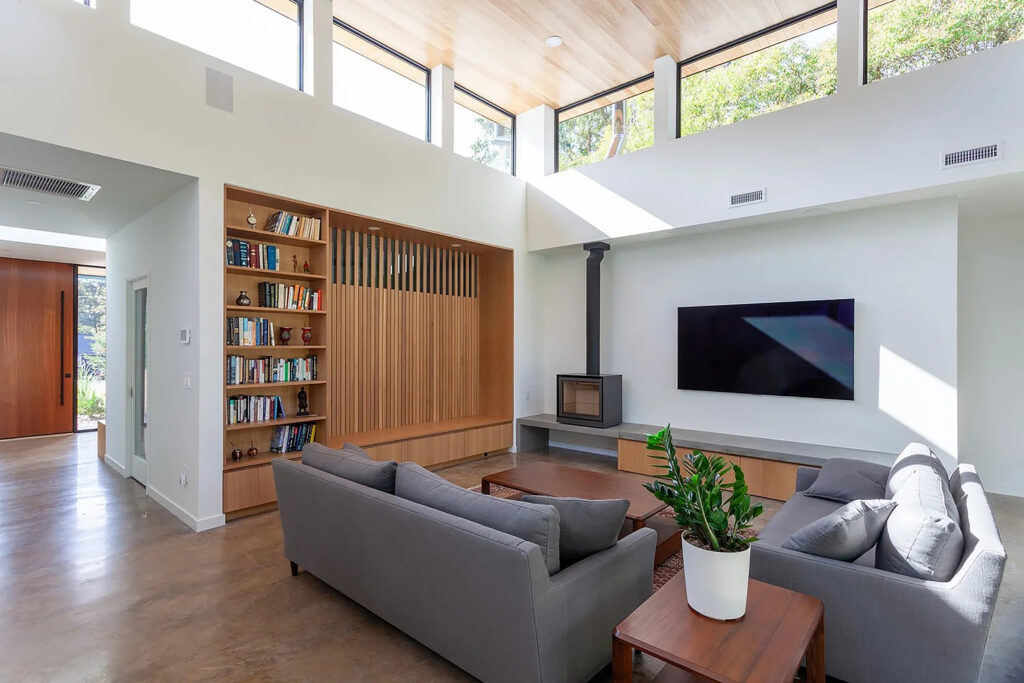
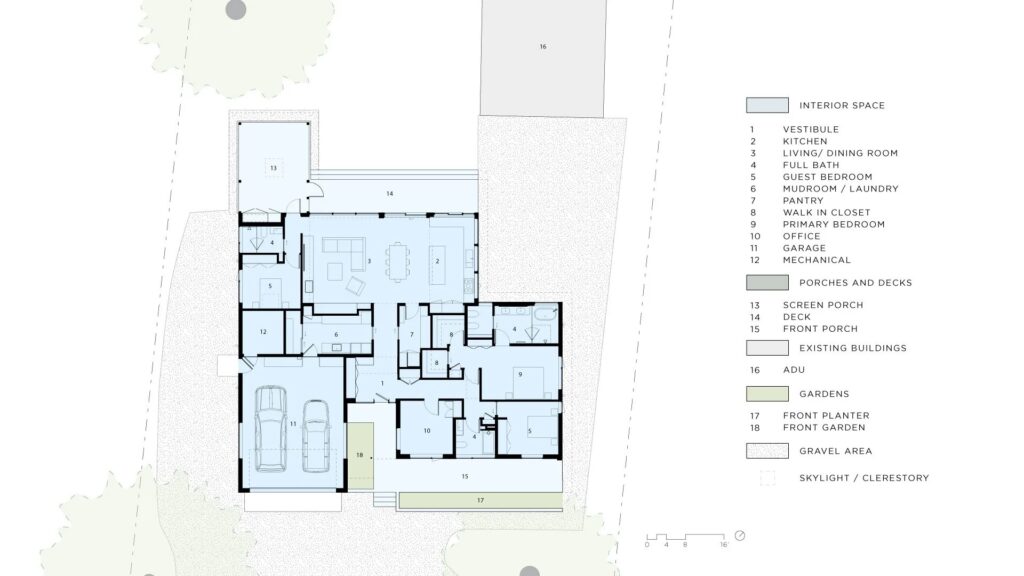
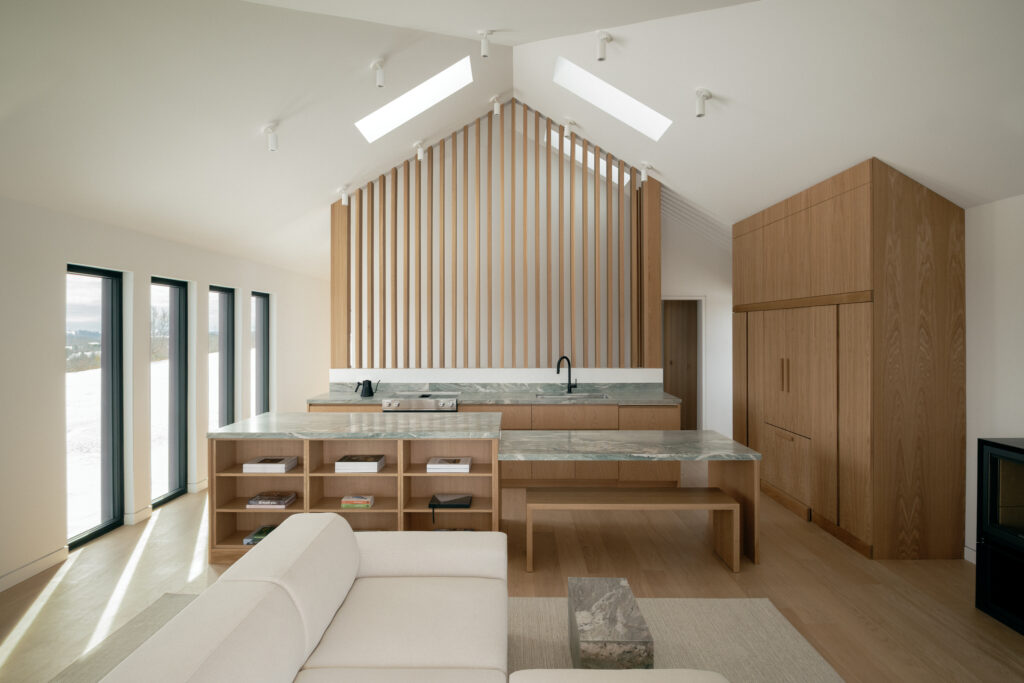
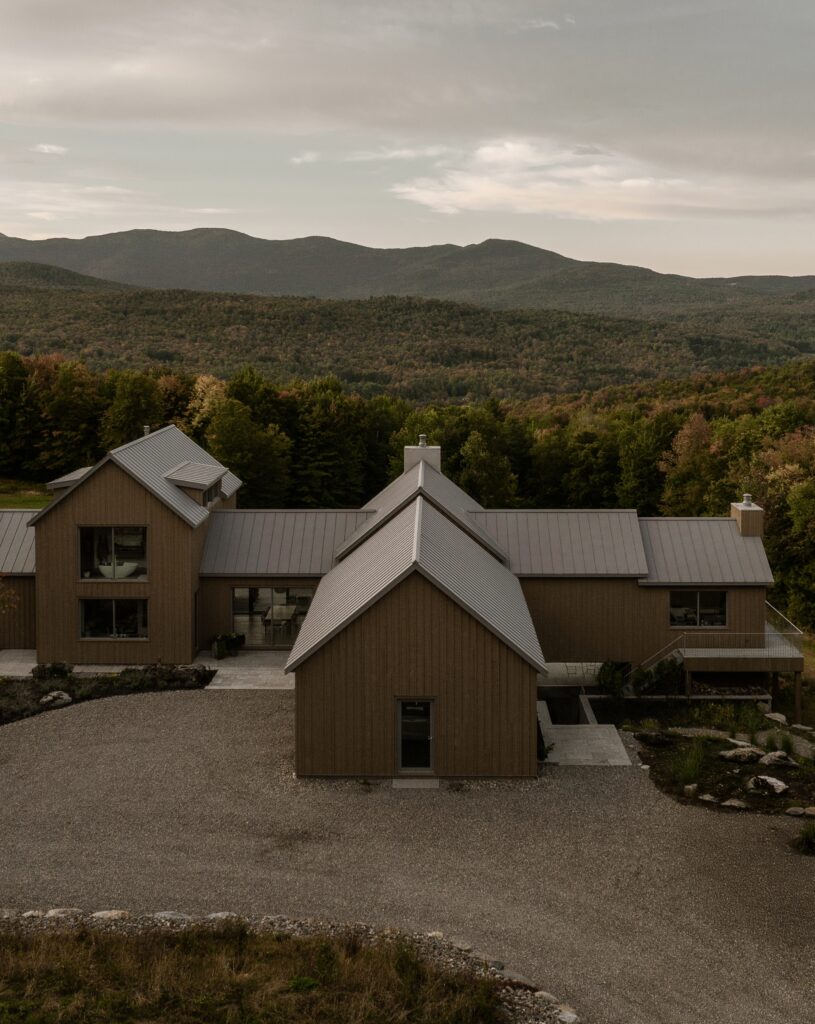
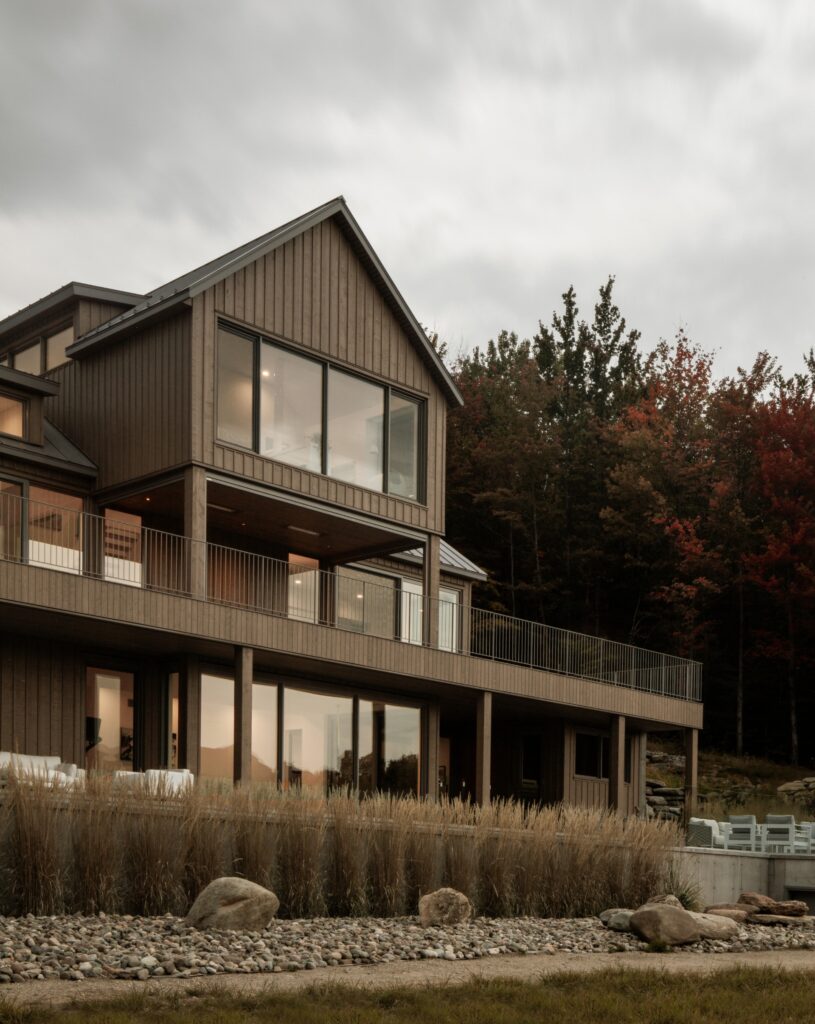
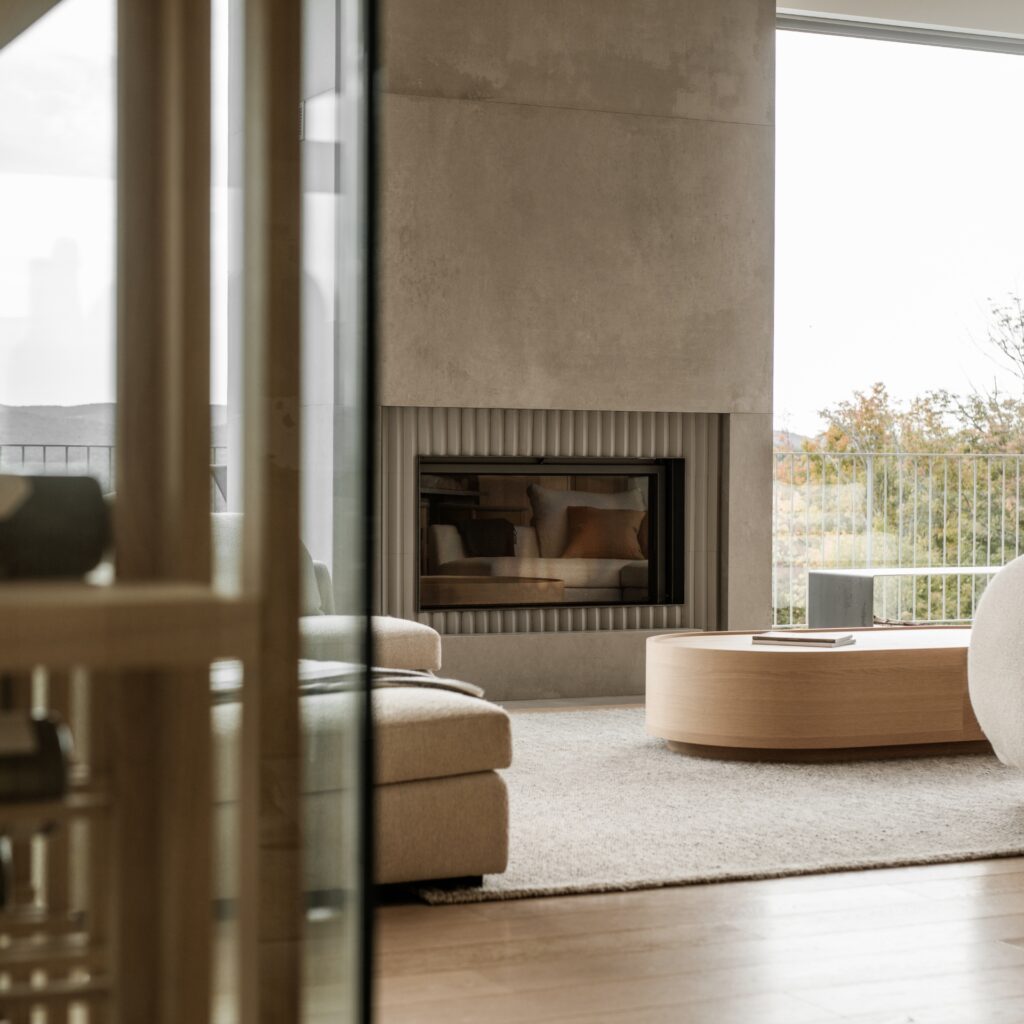
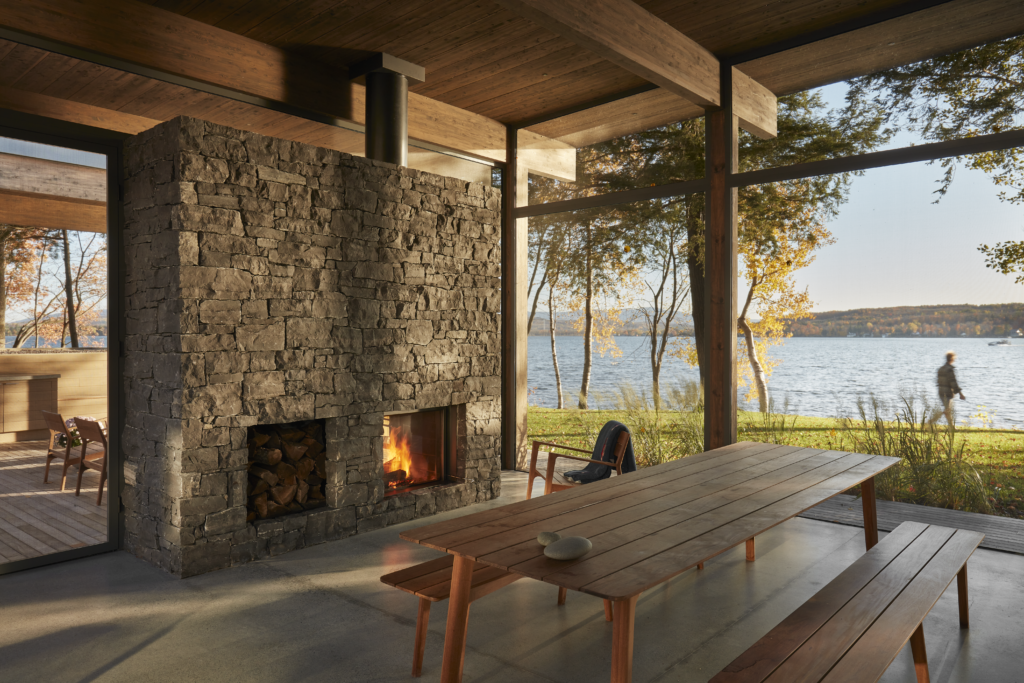
Oak Street Lightcatcher is a 2,350-square-foot, single-story residence in a walkable neighborhood of Carrboro, North Carolina.
Designed around natural light, the house unfolds between two generous porches. A welcoming front porch engages the street, while a sheltered backyard porch draws inspiration from the covered outdoor spaces of homes in La Pampa, Argentina. Together, they extend everyday life outdoors and create a continuous connection between the home, the landscape and the neighborhood.
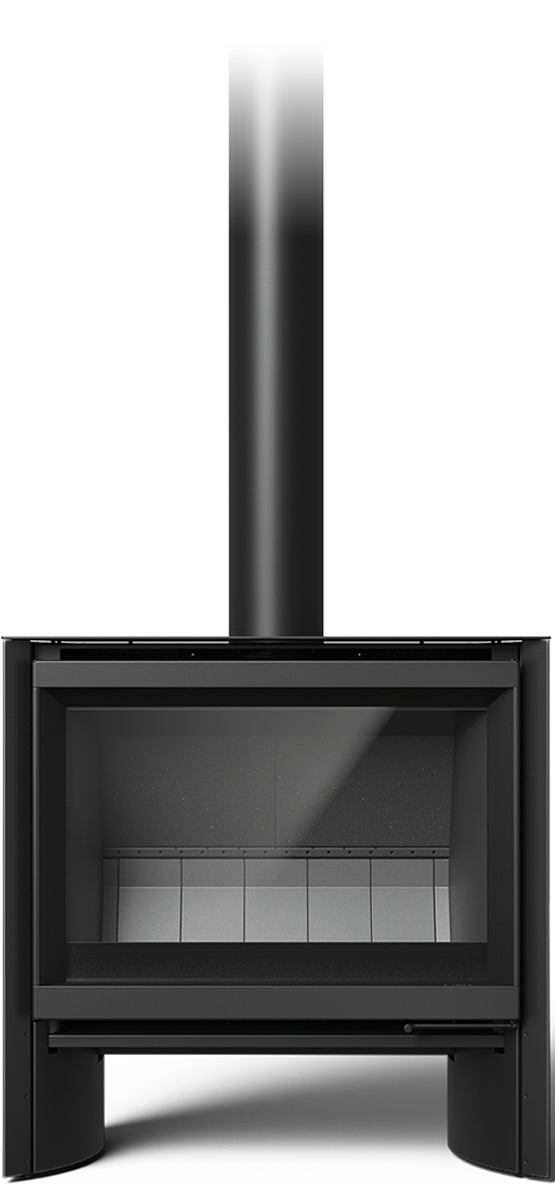
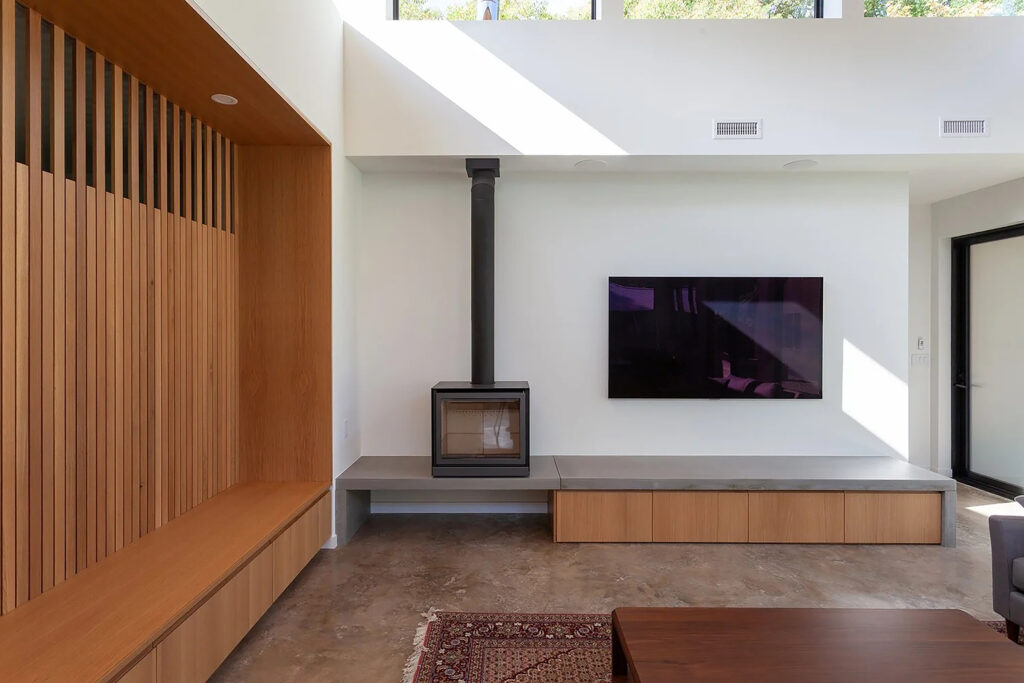
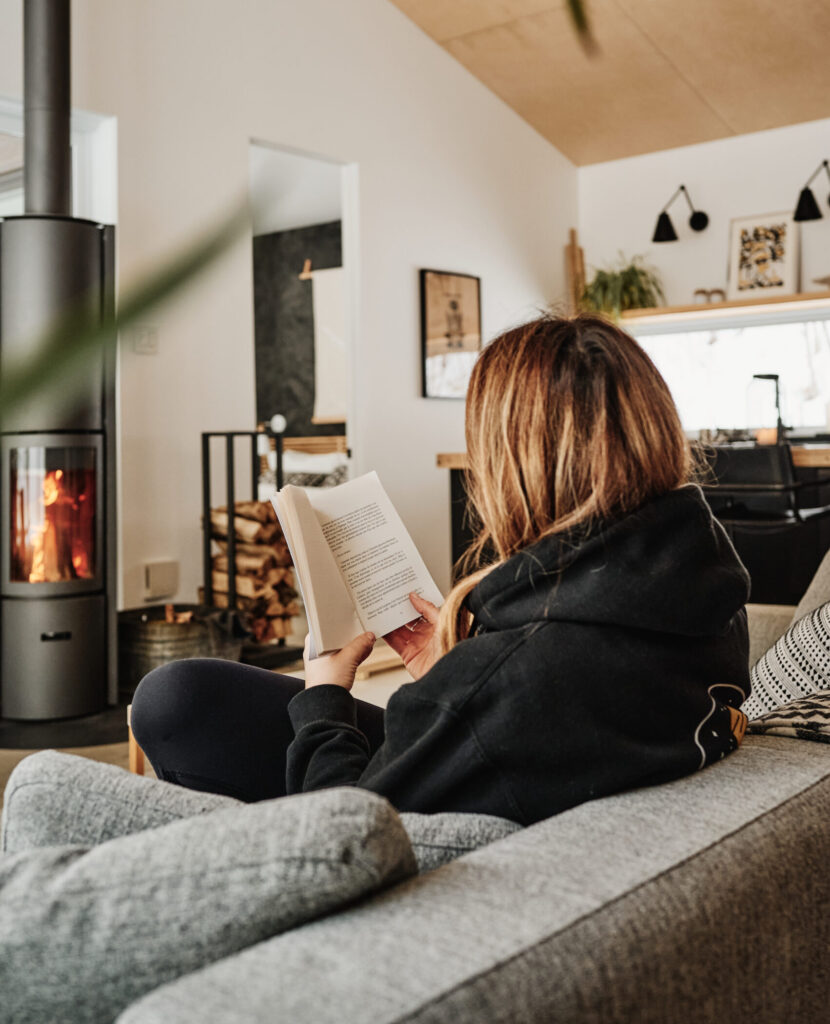
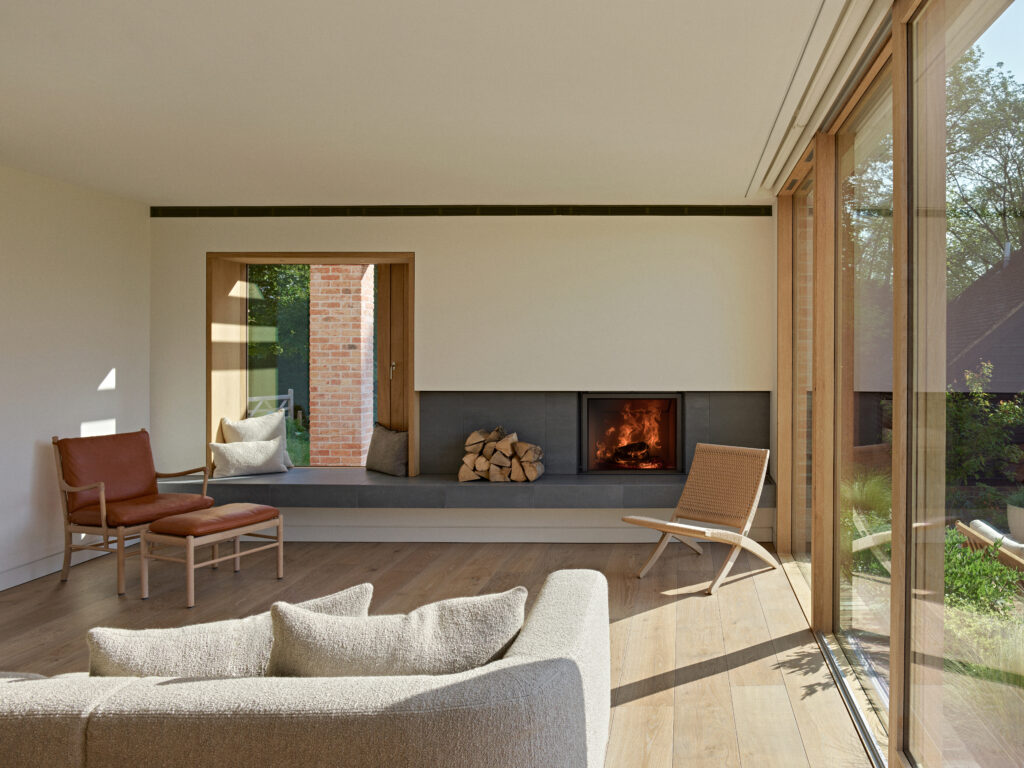
At the heart of the living space, the s16-cube 68 wood stove becomes a balanced focal point. Its minimal detailing and restrained geometry complement the warm, contemporary character of the interior. The stove fits naturally into the architecture without competing with the other design elements.
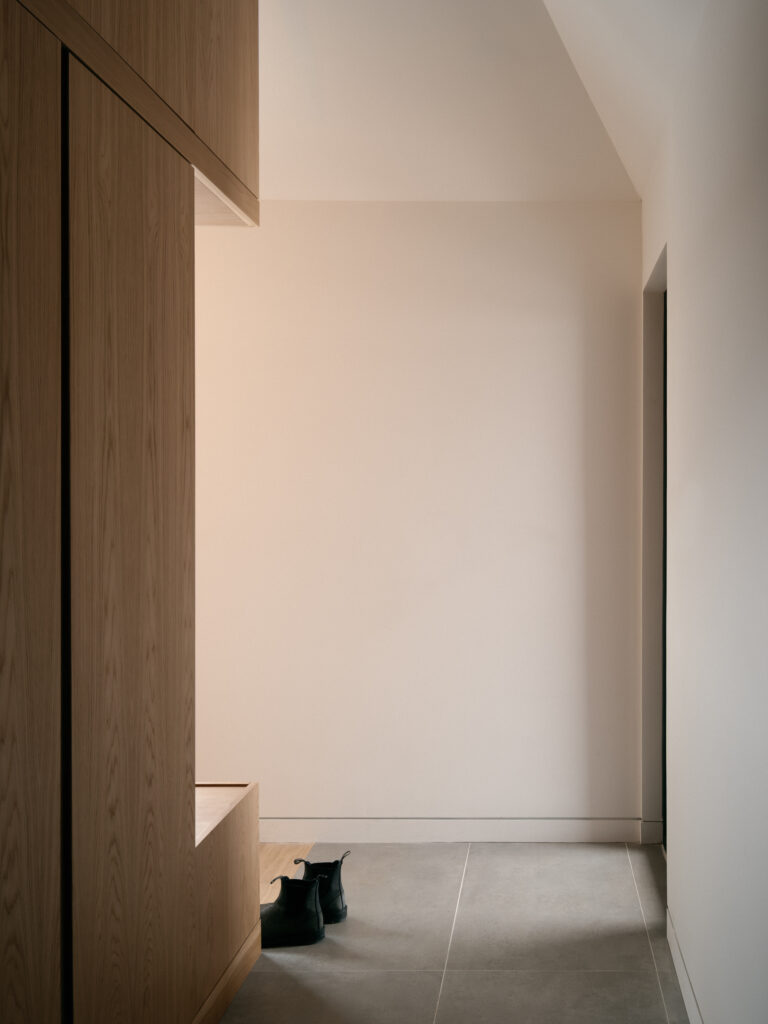
The stove sits gracefully atop a minimalist concrete podium integrated with a built-in bench. Above the bench, vertical slats allow natural light to filter into the adjacent pantry and mudroom. This play of light carries the project’s “Lightcatcher” concept into the details of the living space.
Together, the Stûv wood stove, concrete podium and built-in bench create a cohesive architectural composition. The result is a warm, inviting gathering space that preserves the simplicity and visual calm defining the home.
Discover the Stûv s16-cube
A minimalist wood stove designed to fit naturally into contemporary living spaces.
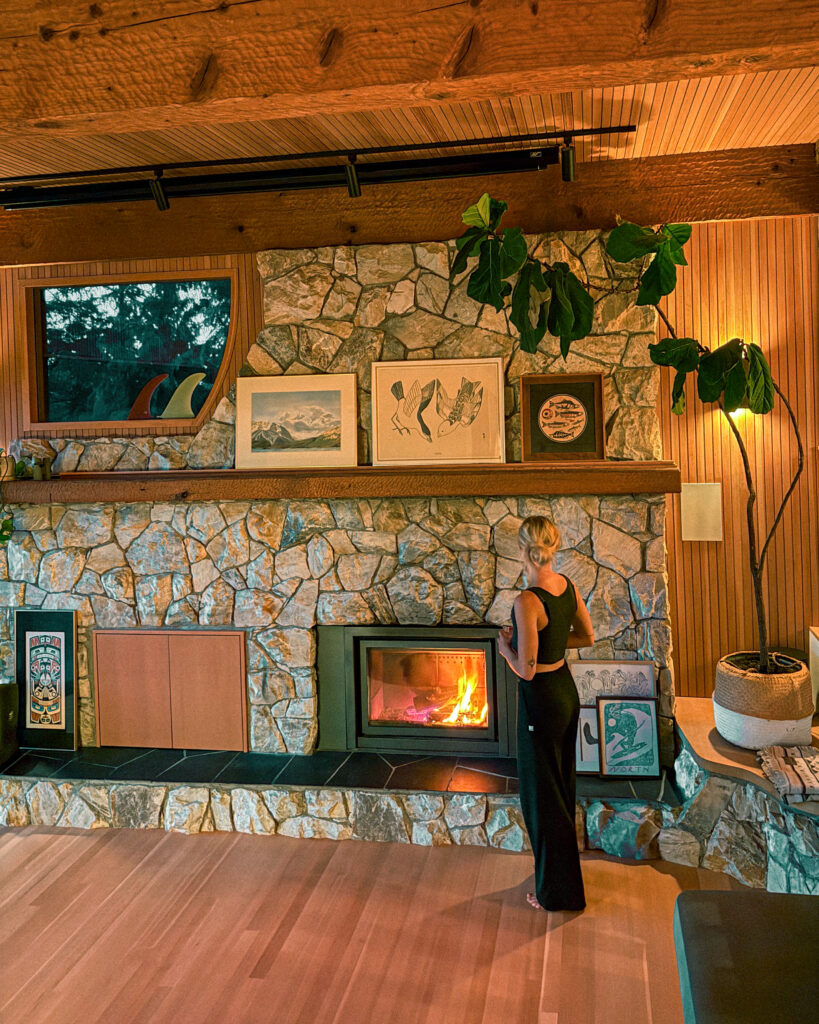
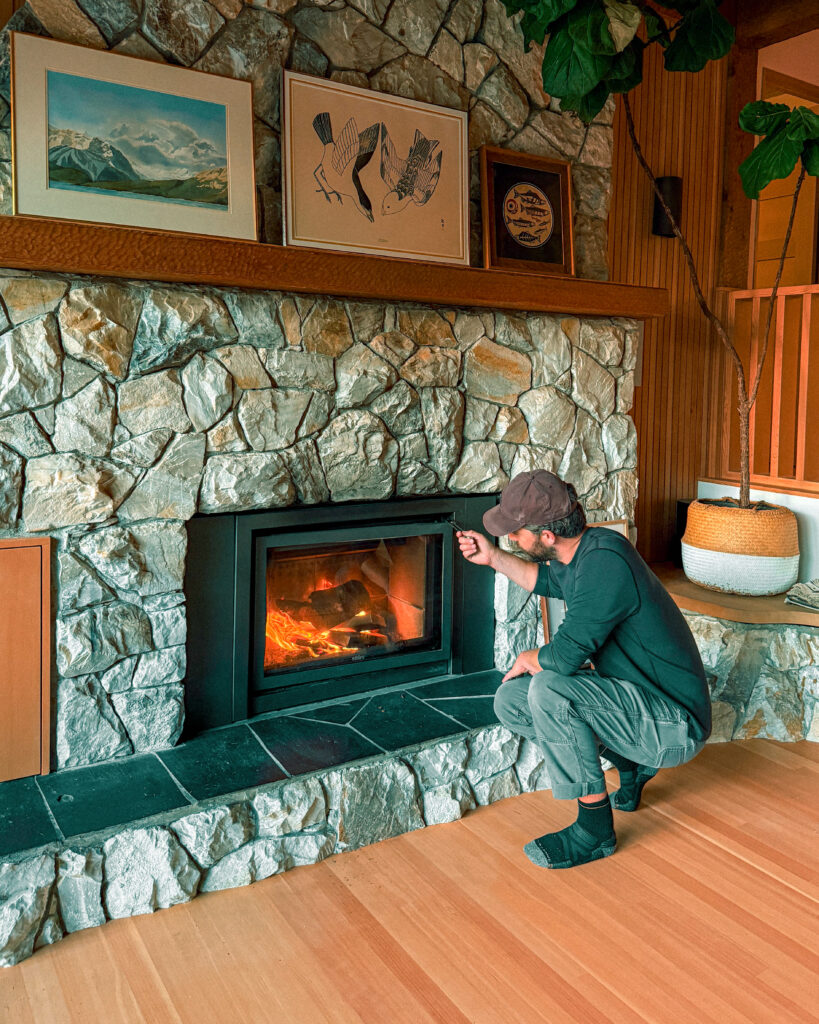
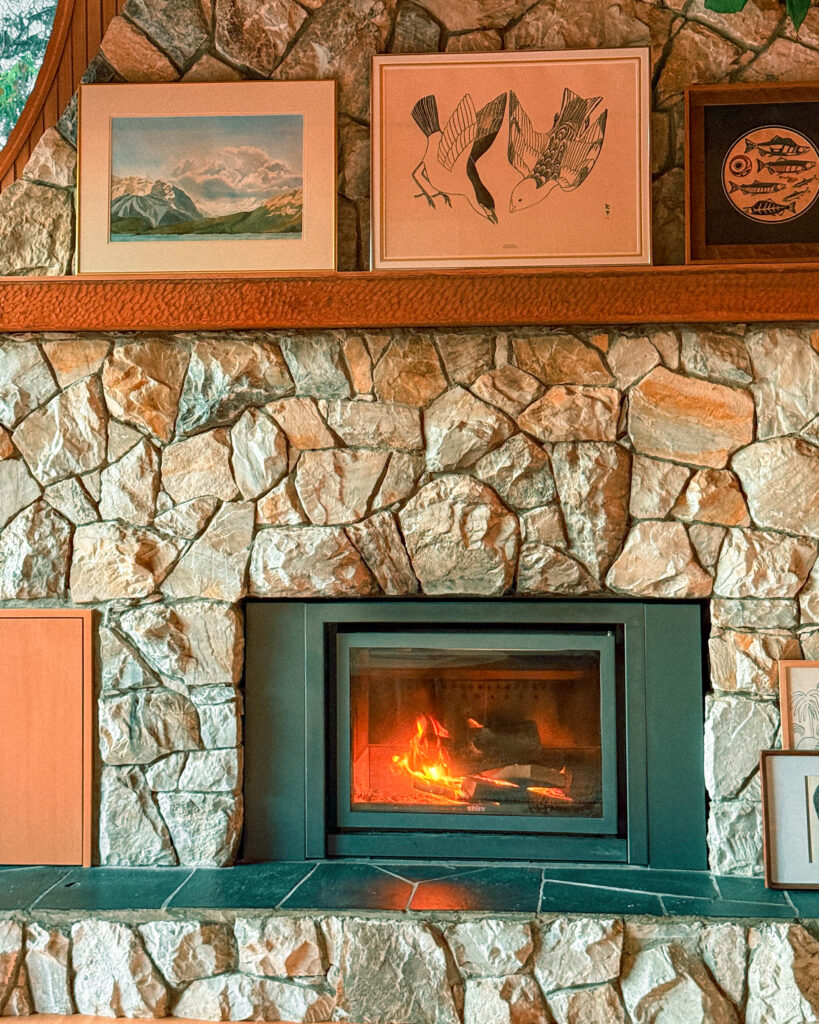
The first time we lit a fire in our Stûv wood insert, it really felt like the house was complete. We had spent so much time thinking about every detail of the space. Seeing the fire for the first time instantly made it feel warmer, cozier and more like home.
Living on the West Coast of Canada, so much of our life revolves around being outside. We surf, walk the beach and spend time in the elements.
There’s something really special about coming home from a cold surf. Hanging up your wetsuit and lighting a fire while the rain comes down outside has become one of those simple pleasures.
We were initially drawn to the Stûv s16-in because of its beautiful, minimal design. It fit naturally into our space. But I don’t think we realized how much we would actually use it or how much atmosphere it would bring to the room. During the colder, rainier months, it has become a natural part of our everyday routine.
Before we installed the insert, the space felt a little more open and unfinished. Now, the fire anchors the room and creates a natural gathering place in our home. The insert is functional, but it also feels like an intentional part of the design. It brings a warmth and coziness that feels especially fitting for life on the coast. It has easily become one of our favourite features of the house.
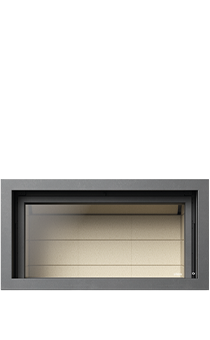
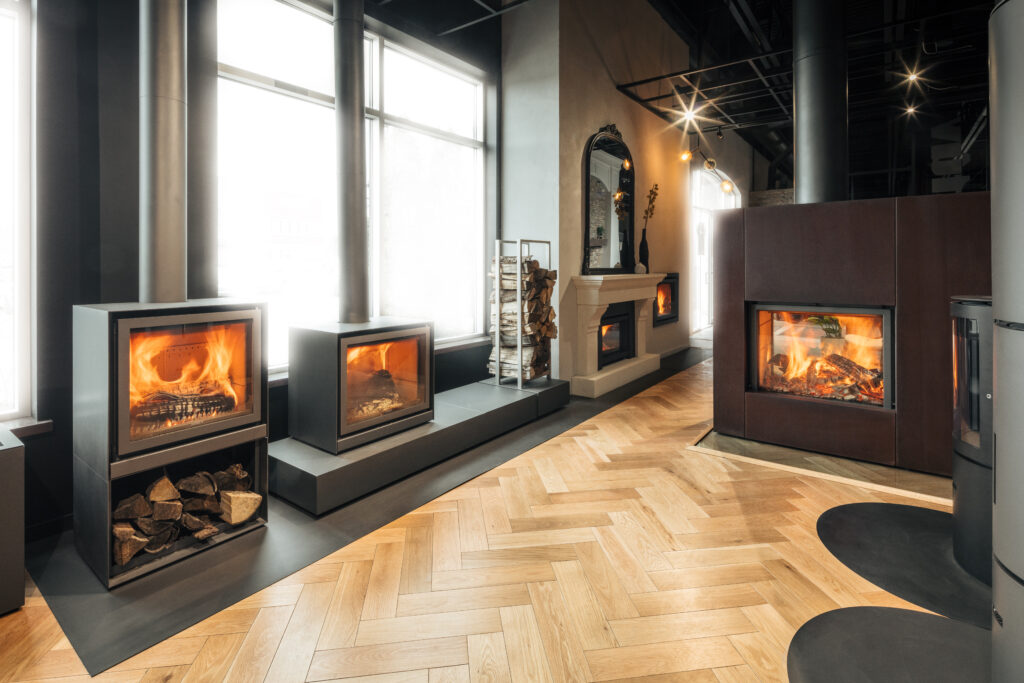
There is no single appliance that is right for every home. The right choice depends on several factors: how you plan to use it, what type of installation your home allows, the space you want to heat and the heating capacity you need. Before choosing a model, here are four questions to help guide your project and find the appliance that’s right for you.
[1] What are you looking for in a wood-burning appliance?
Start by defining what matters most to you. An appliance can be primarily used for heating, creating a warm ambiance, offering a wide view of the flames, or combining several of these uses. How you want to enjoy the fire can influence your choice of appliance, its location and the features you prioritize. For example, if the view of the flames is central to your project, the size of the firebox opening, the orientation of the appliance and its position in the room may all become important considerations.
The takeaway: there is no one-size-fits-all appliance. The right choice should reflect the way you want to experience the fire.
[2] Which type of wood stove or fireplace is right for your project?
Wood stove
A wood stove is a freestanding appliance that can become a central feature of a room. It is particularly well suited to projects where you want to make the fire an integral part of your living space.
Fireplace insert
A fireplace insert is designed to be installed into an existing structure, such as a masonry fireplace. It can be a practical solution for replacing an older appliance and upgrading an existing fireplace.
Zero-clearance fireplace
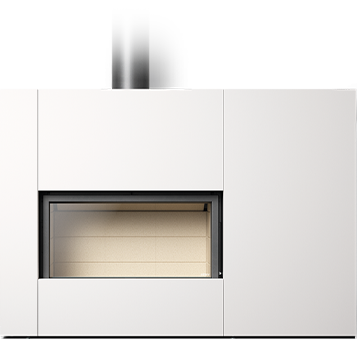
A zero-clearance fireplace offers greater flexibility for new construction and renovation projects. It can be framed and finished around the appliance, allowing it to integrate seamlessly into the architecture of the room.
[3] Can your home accommodate the appliance?
Before choosing a model, it’s important to make sure your home can accommodate the type of appliance you’re considering. Installation must take into account required clearances, the chimney, applicable local codes and the configuration of your home. Depending on the project, an outside air intake may also be required or recommended. Location matters too. An appliance installed in an open-concept space will perform differently from one installed in a more compartmentalized home. Ceiling height, adjacent rooms and airflow can all influence how heat moves through the house.
The takeaway: installation isn’t something to figure out after choosing your appliance. It’s part of the decision.
[4] What heating capacity do you need for a wood stove or fireplace?
More powerful doesn’t necessarily mean better. The appliance’s heating capacity should match the needs of your home. An appliance that is too powerful can produce excessive heat in the room and make it less comfortable to use. An undersized appliance, on the other hand, may not provide the heat you’re looking for.
Several factors should be considered when determining the appropriate heating capacity:
the area you want to heat;
the level of insulation;
ceiling height;
the layout and openness of the space;
the location of the appliance;
the overall characteristics of the home.
Square footage alone isn’t always enough to determine the ideal heating capacity. The right appliance is one whose heating capacity matches the actual needs of your home.
What should you consider beyond heating?
Once the technical considerations have been established, choosing an appliance also becomes a question of experience. How do you want to see the flames? How much presence do you want the appliance to have in the room? Do you prefer a more discreet design or an architectural feature that draws attention? Design, proportions, materials, finish and the view of the fire can all influence your choice.
It’s also worth considering how you’ll use the appliance day to day. Ease of use, access to the firebox, wood loading and maintenance all contribute to the long-term experience. A wood-burning appliance is both a source of heat and an integral part of your living space.
In summary: How do you choose the right appliance?
1. What are you looking for in your appliance?
Heating, ambiance, a view of the flames or a combination of all three?
2. Which type of appliance is right for your project?
Wood stove, fireplace insert or zero-clearance fireplace?
3. Can your home accommodate it?
Consider clearances, the chimney, local codes and installation requirements.
4. How much heating capacity do you need?
Look at your home as a whole, not just its square footage.
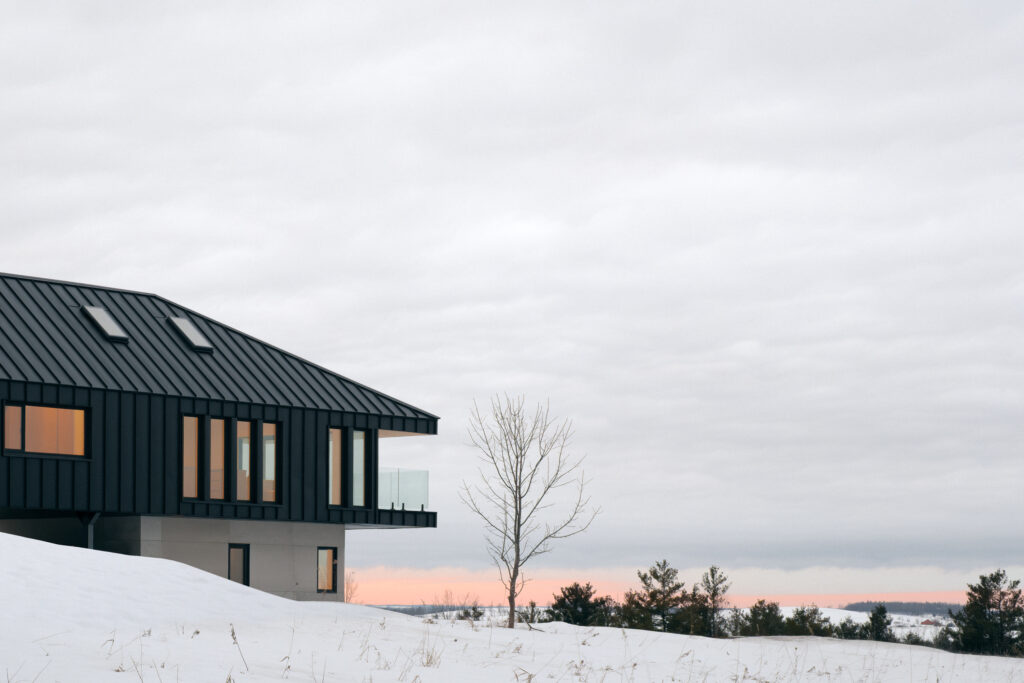
Known for its outdoor activities, Trent Hills offered clear architectural inspiration for this project. The region features rolling hills, Carolinian forests, sprawling farmland and scenic waterways. Perched near the top of one of these hills, Silver Heights frames the surrounding landscape and its breathtaking views.
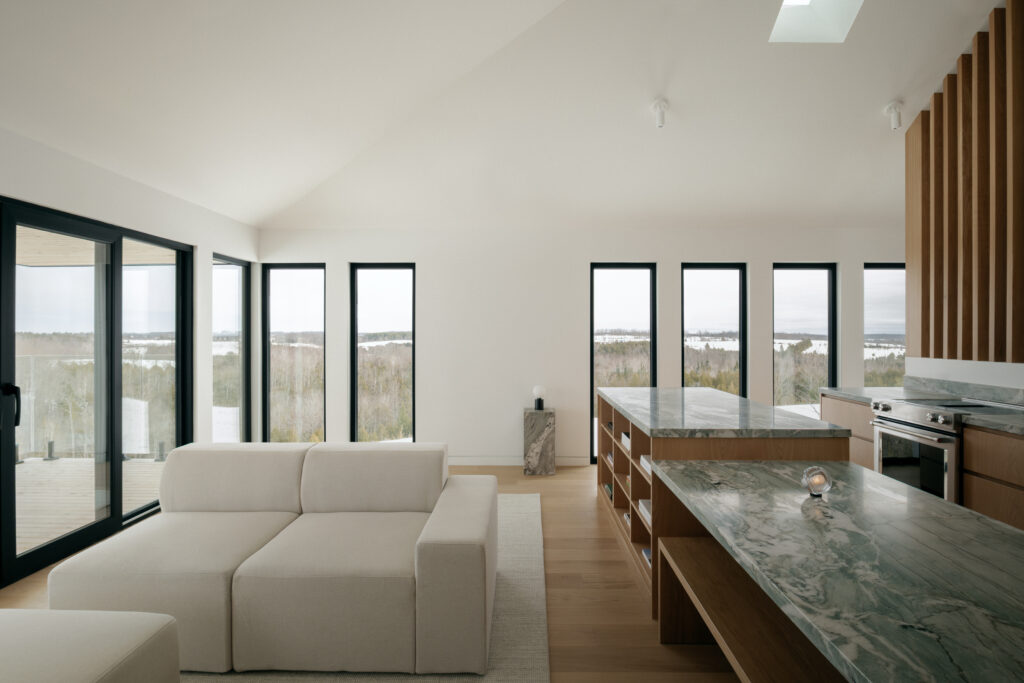
For the young family, creating a strong connection between the home and its surroundings was essential. The architecture serves as both a viewing platform and a place to unwind. Visitors begin their journey along a meandering path through the trees. The path leads to a Corten-clad entry portal and stair, then continues through a corridor oriented toward the landscape. It ends at a partially raised platform, reinforcing the feeling of being fully connected to the land.
The main volume reinterprets the traditional hipped roof in a contemporary way. It rests on a stereotomic plinth that extends the interior living spaces. Vaulted ceilings and carefully placed openings fill the home with natural light. They also promote effective natural ventilation throughout the building.
The material palette highlights the home’s three distinct elements: the concrete plinth, the black metal main volume, and the weathered steel stair and entry portal. Each material provides lasting durability against Ontario’s changing climate. Eastern white cedar adds warmth and a soft tactile quality to the outdoor living spaces.
Located along the shores of Lake Memphremagog, the B.B. residence underwent a major transformation. Only the existing foundation was preserved. The project involved completely reimagining the home to create a bright, timeless residence deeply connected to its natural surroundings.
Our mandate was to design open and functional living spaces. These spaces highlight the spectacular lake views while bringing warmth and softness to the architecture. The volumes were redesigned to encourage fluid circulation between the different living areas. Arches, mineral textures, and natural materials subtly define and structure the space.
At the heart of the main living area, the Stûv fireplace integrates naturally into the architecture. Framed by an imposing natural stone surround, it acts as an anchor point between the living room and kitchen. It also adds a refined and understated presence to the space. Its placement was carefully considered to complement the home’s open sightlines without overwhelming the overall design. As a result, the fireplace contributes fully to the warm and inviting atmosphere of the residence.
Every material was selected to balance the scale of the space with a sense of softness and comfort. The fireplace stone adds character and grounding to the living area, while the wood textures and light-toned palette soften the overall composition and enhance the surrounding landscape.
The result is a contemporary residence with clean lines, where interior architecture, natural materials, and the fireplace work together to create a space that feels elegant, welcoming, and enduring.
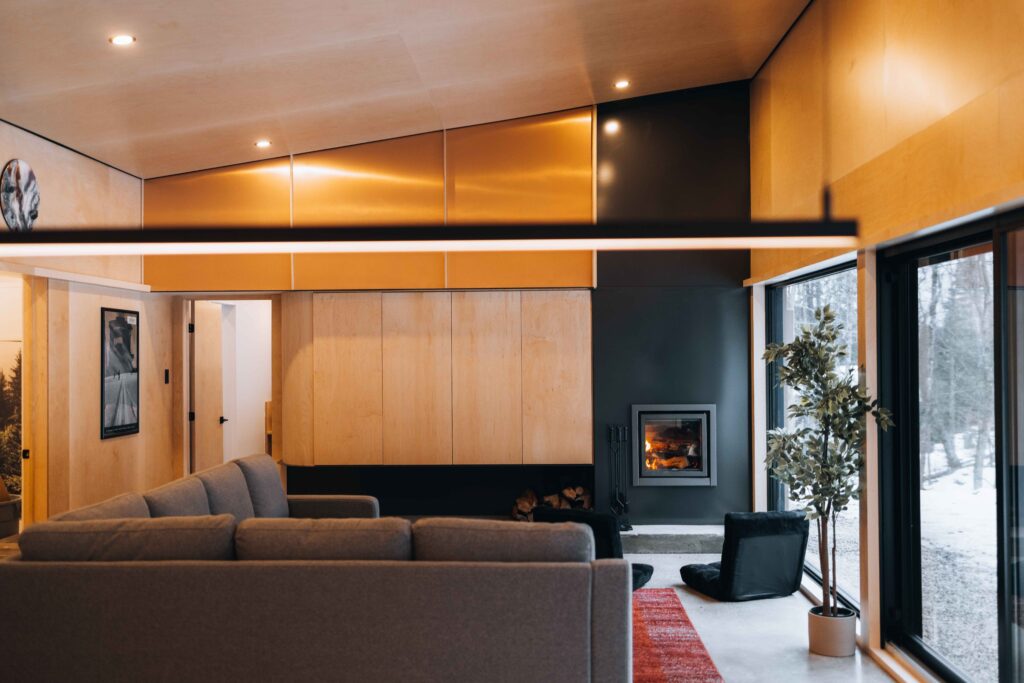
Aile Noire took 4 years to bring to life, from purchasing the land to driving in the final nail. It’s a family home nestled on the shores of Lake Sacacomie in the Mauricie region, designed to feel like it belongs to the landscape rather than imposed on it. Inspired by mid-century and Scandinavian architecture, we wanted to create a home that lives in conversation with its surroundings preserving every possible tree and orienting each line toward the view. Living here already feels like an escape.
[2] Why did you choose to include a wood stove?
Choosing a life rooted by the lake, a wood stove simply felt essential. It’s part of living here fully and honestly: most of the wood we burn comes directly from our own land. But our Stûv is much more than a pleasure feature, it’s a crucial heat source. With its expansive windows, our home is exposed to the harsh Mauricie winters. In January, during the coldest stretches, the Stûv runs around the clock without missing a beat. We were first drawn to it for its design, which blended seamlessly with our clean, minimal interior, but we quickly came to appreciate its performance just as much. For us, the two were inseparable.
[3] Where and how did you integrate it into the space?
Our stove sits in the corner of the main living area, framed by two large windows. That placement was intentional: it’s the natural focal point of the room, where your eye instinctively lands, with direct views of the lake and forest beyond. In our pared-back interior, defined by warm and understated lines, the Stûv feels completely at home: both sculptural and functional. From that corner, we watch everything unfold: birds passing by, shifting light, sunsets setting the lake on fire. The stove and the landscape answer each other beautifully: one warms, the other calms.
[4] What do you appreciate most about it? Anything you didn’t expect?
What we didn’t expect was how much the Stûv would become part of our family rituals. Cutting, stacking, and preparing the wood has turned into a seasonal tradition we genuinely look forward to. We burn as much wood from our property as possible, and when we source it elsewhere, we choose it carefully. It becomes an experience in itself.
Then comes the first fire of fall. The moment the Stûv reaches full combustion and begins radiating its heat is deeply satisfying. When we burn cedar, its scent slowly fills the room and the flames take on a soft blue hue, almost hypnotic.
And then there’s the nighttime ritual: waking up to feed the fire, slipping back into bed, and catching a glimpse through the layered windows of the Stûv’s glowing red core flickering softly in the dark. It’s something we never get tired of.
A bi-generational architecture embedded in the topography
Located in the beautiful Eastern Townships region, the Frontière residence engages in a sensitive dialogue with the Adirondack mountain landscape. The project orients itself toward this spectacular mountain backdrop and frames views from each of its volumes. Designed as a multigenerational home, the architecture brings together a series of interconnected pavilions that follow the natural topography, allowing for a presence that feels both grand and discreet. This fragmented composition softens the impact of the large footprint while creating a more human-scale reading of the home.
A continuous relationship with the landscape
Despite the scale of the program, the spatial experience remains warm and intimate. The alternation of flat ceilings, double-height spaces, and cathedral ceilings was carefully designed to suit the function of each area. At times, exposed structural elements highlight these shifts in height. As a result, they guide the occupant through the volumes. Their balanced proportions and understated, enveloping materiality create a sense of harmony. Generous openings maximize natural light and reinforce the constant connection between indoors and out. The residence becomes a lived-in observatory, where every room maintains a privileged relationship with the surrounding landscape.
The s21 fireplace as a focal point of the living space
At the heart of the main living area, the integration of the Stûv stove contributes to this search for balance between performance and aesthetics. With its wide panoramic glass and clean lines, the appliance blends seamlessly into the contemporary architecture. At the same time, it offers a warm and inviting presence.
The double-sided fireplace stands as a central element in this residence located in Lac-Brome. Set on a relatively small lot facing the eponymous lake, it sits within a neighbourhood characterized by large two-storey homes. The challenge was to orient the house toward the lake’s sublime panorama without compromising the occupants’ privacy. The chosen strategy was to design a single-story residence composed of two wings connected by a majestic glass passageway.
Built of wood and stone walls, the Lake Brome Residence emphasizes the durability and nobility of natural materials, allowing it to integrate into its surroundings in a refined, elegant, yet modest manner. At key moments, striking visual openings cut through the house, projecting the eye toward the lake. This is notably the case from the main entrance, where the glazed passage precisely frames the landscape view. Conversely, in the primary suite, an interior garden surrounds a tree, isolating it like a work of art. In this way, the house unfolds almost like a museum walk, revealing, highlighting, accentuating, or isolating elements of the surrounding context with accuracy and sensitivity.
The Forest Shelter project follows a sustainable architectural approach, rooted in the landscape and guided by the use of natural materials. The space was designed as a seamless extension of the outdoors. Materials, light, and textures fully contribute to the experience of the place. The use of hempcrete and lime finishes is a strong demonstration that it is possible to create buildings whose materials, beyond their performance, actively contribute to carbon storage.
[2] How did you feel the first time you lit a fire in your new stove?
An immediate sense of calm and balance. The fire brought the space to life, highlighting the texture of the finishes and enhancing the cozy, refuge-like atmosphere we aimed to create. It was simple, intimate, and deeply comforting all at once.
[3] What do you enjoy most about this stove—something you hadn’t anticipated?
The quality of the fire’s presence. Beyond its thermal performance, what surprised us most was how the stove inhabits the space: the light, the rhythm of the flames, and the gentle warmth all transform the perception of the space throughout the day.
[4] How do you find your space now compared to before the installation?
From the very design of the Forest Shelter, the stove asserted itself as a structuring element of the project. The chimney extends the vertical movement of the vaulted ceiling, emphasizing its height and clarifying the perception of the volume. A natural focal point, it contributes to both the spatial quality and the daily functioning of the space.
About Echo series
Our Echo seriesshowcases the thoughtful decision-making process that echoes through time. A wood stove or fireplace, carefully chosen, embodies this resonance – an object that, beyond its function, leaves a lasting and unique imprint on the space it inhabits.
An all-wood home rooted in the Charlevoix landscape
This residence in Cap-à-l’Aigle stands out for its seamless integration into the landscape overlooking the St. Lawrence River. Carefully positioned between river and forest, it was designed without removing a single tree. The U-shaped layout forms a sheltered inner courtyard, protected from neighbours and filled with natural light throughout the day. Two solid walls frame the residence, creating a visual connection to both landscapes.
The roof and its generous overhangs serve a functional purpose. They also celebrate the project’s structural clarity. Together, they establish an architectural dialogue that blends constructive logic with a subtle, almost dreamlike quality. The interplay of light and shadow sculpts the interior, allowing seasonal light to animate the space. The refined symmetry — in both plan and volume — resulted in a straightforward and efficient construction process.
A Wood Stove at the Heart of a Sustainable Timber Construction
Built entirely of wood, the residence embraces contemporary Québec architecture. It deliberately rejects synthetic materials such as drywall. This enhances both durability and authenticity. Every decision was guided by longevity: minimizing future replacements, prioritizing sustainable energy, and selecting local materials to reduce environmental impact.
This single-storey house-landscape offers an immersive living experience. Nature remains the dominant presence throughout. It creates a rich architectural experience — defined by quality, restraint, and a respectful dialogue with its natural setting.
To provide the best experiences, we use technologies like cookies to store and/or access device information. Consenting to these technologies will allow us to process data such as browsing behaviour or unique IDs on this site. Not consenting or withdrawing consent, may adversely affect certain features and functions.
Functional
Always active
The technical storage or access is strictly necessary for the legitimate purpose of enabling the use of a specific service explicitly requested by the subscriber or user, or for the sole purpose of carrying out the transmission of a communication over an electronic communications network.
Preferences
The technical storage or access is necessary for the legitimate purpose of storing preferences that are not requested by the subscriber or user.
Statistics
The technical storage or access that is used exclusively for statistical purposes.The technical storage or access that is used exclusively for anonymous statistical purposes. Without a subpoena, voluntary compliance on the part of your Internet Service Provider, or additional records from a third party, information stored or retrieved for this purpose alone cannot usually be used to identify you.
Marketing
The technical storage or access is required to create user profiles to send advertising, or to track the user on a website or across several websites for similar marketing purposes.
To provide the best experiences, we use technologies like cookies to store and/or access device information. Consenting to these technologies will allow us to process data such as browsing behaviour or unique IDs on this site. Not consenting or withdrawing consent, may adversely affect certain features and functions.
Functional
Always active
The technical storage or access is strictly necessary for the legitimate purpose of enabling the use of a specific service explicitly requested by the subscriber or user, or for the sole purpose of carrying out the transmission of a communication over an electronic communications network.
Preferences
The technical storage or access is necessary for the legitimate purpose of storing preferences that are not requested by the subscriber or user.
Statistics
The technical storage or access that is used exclusively for statistical purposes.The technical storage or access that is used exclusively for anonymous statistical purposes. Without a subpoena, voluntary compliance on the part of your Internet Service Provider, or additional records from a third party, information stored or retrieved for this purpose alone cannot usually be used to identify you.
Marketing
The technical storage or access is required to create user profiles to send advertising, or to track the user on a website or across several websites for similar marketing purposes.